


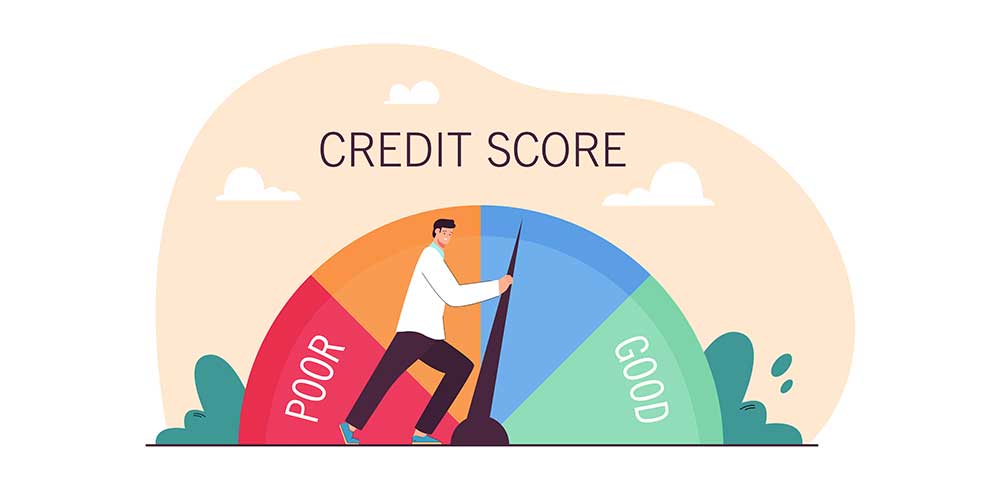
Ajay and Anil want to buy a home. So, they applied for a home loan of 50 lakhs. Ajay secured the loan at 6%, while Anil faced difficulties and the lender offered a high interest rate; however, Anil ultimately secured a loan at 8% interest.
But the question is why it happen? Reason- Ajay has a credit score of 750, while Anil has 640.
Now, you might be wondering, why credit score plays such a big role? To know this, come along and read the blog as today we are discussing the all the important aspects of credit score.
What is a credit score?
A credit score is a three-digit number that reflects your ability to repay a loan. It also helps, banks and lenders to understand the potential risk of a borrower, whether you will repay the loan or not.
It is like: - You borrowed a dress from your friend and said that you will return it after 10 days, and on the 7th day, you returned that borrowed dress, and you do this often, which means you are a trustable person. If you often lose the borrowed things or returned it after the said time. This thing shows that you are not a trustable person.
It is the same with credit score, how often you pay your bills before the due date or on the due date shows, how trustworthy you are, and your trust score is reflected in the three - digit number. Typically ranges between 300 to 900. In India, a credit score is determined by CIBIL, which is a company that has access of our credit information and history, and based on that information, CIBIL calculates the credit score of an individual.
Why is Credit Score being important for home loans?
For lenders, the evaluation of a home loan application is mainly about the risk assessment. A home loan typically involves a large amount of money and a long duration of repayment. So, the lender needs assurance that the borrower is reliable and will repay the loan in the given tenure. Your credit score gives them a quick snapshot of your creditworthiness, and it allows them to instantly evaluate the risk associate with lending loan to you.
Factors on which Credit Score is calculated
There are certain factors which contributes towards the calculation of credit score. Some of the important factors are listed below: -
1. Repayment History: It is one of the important factors that contribute to your credit score. Repayment history shows how regularly you repaid all your previous debts. This factor contributes to around 35% of your overall credit score.
2. Credit Balance: The meaning of credit balance means the portion or amount of the sanctioned limit is unutilized. The higher the credit utilization, the greater the chances of defaulting. It means, if you use your credit card very often with higher credit utilization, it will have bad impact on your credit score. Your pattern of credit utilization contributes to around 30% towards the calculation of your credit score.
3. Duration: The duration for which you have availed credit and the punctuality of repayment during that tenure it almost contribute 15% of the overall credit score.
4. Enquiry for New Credits: Too many enquiries about credit cards and loans in short time has negative impact on the credit score. As it may give the impression that you are very eager to get huge credits and shows that you have more liabilities than your income. This factor influences the credit score by a maximum of 15%.
5. Credit Mix: The mix of long-term loan & short-term loans, or secured & unsecured loan also contributes towards your credit score by up to 10%. If you have a good mix of these loans credit score will rise, means it has positive impact on the score, but if you took the one type of loan frequently it will work negative.
Minimum CIBIL Score for a home loan
Lenders generally consider 725 as the minimum CIBIL Score required for a home loan. A score ranging between 725 to 749 is considered good for the home loan. Score ranging between 550 to 649 are considered average and required to work on, and the score 300 to 549 falls in the category of bad score. If your CIBIL score is lower than 750, you can still get an approval for a home loan by reducing your liability, increasing your income, or opting for a longer tenure, and you can also increase your down payment to get the home loan.
With Credit Score, lenders also consider other factors like age, your income, current liabilities, your employment status, and down payment. So, if these factors are in your favour, you are most likely to get home loan approval. Sometimes they also analyse the credit report not only to check your score but also to see how often you paid your bills on time to predict your future repayment patterns. A high credit score suggests that you had paid your EMIs on time and lower score suggest the opposite. Your credit score also serves as the standardized way for lenders to analyse home loan applications instead of relying only on subjective factors like personal judgments or qualitative assessments.
How does it impact the eligibility of home loan?
The most immediate and direct way that a credit score affects your home loan application is on your eligibility and the likelihood of approval.
1. Approval Chances: Lenders actively look for borrowers with High CIBIL scores, considering them a good candidate for home loan or any other loan.
2. Faster processing: Applications with strong scores often get thumbs up for the sanction of loan.
3. Negotiating Power: A good score gives you leverage to negotiate better interest rates and terms.
Credit score and its impact on Interest Rates
Your Credit Score has a big impact on the interest rate you will get. A high score will get you lower interest rate, and a lower credit score will get you higher interest rate.
Many lenders follow a risk-based pricing model:
1. Lower Risk = Lower Interest Rates: Applicants with excellent Credit Scores are considered low-risk. Lenders often offer lower or competitive rates to applicants who have a good credit score or history. Even a small reduction in the interest rates on a large amount of home loan over a long tenure can saves tens of thousands or sometime even lakhs over the life of the loan.
2. Higher Risk=Higher Interest Rates: Applicants with lower credit score are considered high risk, lenders will offer a higher interest rate in order to get the maximum amount of the loan initially. The increase in interest rate will also increase your monthly EMIs and total cost of your home loan as well.
Activities that result in low credit scores
There are certain activities that can negatively impact the credit score.
1. Late/ Missed Payments: Payment history plays an important part of determining the credit score. If you delay your payment by 1 month, it will have a significant impact on your credit score, and it is also possible that you might be considered as a payment defaulter.
2. Negative Credit Card limits: Repossessions, foreclosures, and bankruptcy are listed on your credit report and have a long-term negative impact on your credit score.
3. Many loan applications in a short period: Applying for multiple loans in a short duration presents you as an individual who is suffering from financial problems, and this can lead to a reduction of credit score and rejection of your loan application.
4. Exceeding credit card limit: It is suggested to keep the utilization ratio below 30% of the available limit. Exceeding this limit every month or very often indicated extreme dependence on credit cards, and it may lower your credit score.
5. Many unsecured loans: Having a high number of personal loans or credit cards compared to secured loans can be perceived as risky.
6. Loan defaults or settlement: If you default on the loan or settle it for less than the full amount. It will severely affect your credit score and will remain in your credit report for up to 7 years.
Simple Credit Moves- That Make Lenders Say Yes
1. Pay credit card bills and EMIs on time: To pay bills on time-set reminders, automate payments to make sure that you don’t miss a due date.
2. Avoid enquiring for multiple loan applications: Each hard enquiry lowers the score temporarily. Apply only when you actually require loan and are confident about approval for the same.
3. Low credit utilization ratio: Keep the credit card spending below the sanctioned limit. Ideally, the good spending is considered 30% of your credit card limit.
4. Higher down payment: If your credit score is not up to the mark, you can offer a somewhat larger amount of down payment, which will reduce the amount of the home loan. The increased amount of down payment reduces the risk of lender. This might make them more flexible with the lower Credit Score and may offer you a home loan.
5. Joint Home Loan with Co-applicant: If your score is low and you want a home loan, one of the best ways to get home loan is to apply for a joint home loan with a co-applicant having a good credit score. In this way, your chances of getting a home loan will increase Their good credit score can compensate for your weaker score. This co-applicant can be anyone, your spouse, or your other family members.
6. Guarantor: If you can provide a guarantor, some lenders may approve your loan if the provided guarantor is financially sound and agrees to repay the loan in case you can’t repay it.
Maintaining a healthy credit score is not just about getting a loan-it’s about securing better financial opportunities, lower interest rates, and long-term peace of mind.
By managing your credit responsibly today, you can turn your dream of owning a home into a smooth and affordable reality tomorrow.